- English
- French
- German
- Portuguese
- Spanish
- Russian
- Japanese
- Korean
- Arabic
- Greek
- German
- Turkish
- Italian
- Danish
- Romanian
- Indonesian
- Czech
- Afrikaans
- Swedish
- Polish
- Basque
- Catalan
- Esperanto
- Hindi
- Lao
- Albanian
- Amharic
- Armenian
- Azerbaijani
- Belarusian
- Bengali
- Bosnian
- Bulgarian
- Cebuano
- Chichewa
- Corsican
- Croatian
- Dutch
- Estonian
- Filipino
- Finnish
- Frisian
- Galician
- Georgian
- Gujarati
- Haitian
- Hausa
- Hawaiian
- Hebrew
- Hmong
- Hungarian
- Icelandic
- Igbo
- Javanese
- Kannada
- Kazakh
- Khmer
- Kurdish
- Kyrgyz
- Latin
- Latvian
- Lithuanian
- Luxembou..
- Macedonian
- Malagasy
- Malay
- Malayalam
- Maltese
- Maori
- Marathi
- Mongolian
- Burmese
- Nepali
- Norwegian
- Pashto
- Persian
- Punjabi
- Serbian
- Sesotho
- Sinhala
- Slovak
- Slovenian
- Somali
- Samoan
- Scots Gaelic
- Shona
- Sindhi
- Sundanese
- Swahili
- Tajik
- Tamil
- Telugu
- Thai
- Ukrainian
- Urdu
- Uzbek
- Vietnamese
- Welsh
- Xhosa
- Yiddish
- Yoruba
- Zulu
Which is better, stainless steel or borosilicate glass?
When looking for storage solutions for your company, the question of whether to use borosilicate glass or stainless steel usually boils down to your individual demands and the nature of your applications. Since various materials shine in different lighting, the question isn't easily answered. A high borosilicate storage jar stainless steel lid, on the other hand, provides the best balance between the two materials. Borosilicate glass is used for its transparency and inertness in this hybrid design, while stainless steel is used for its durability and sealing effectiveness. Combine the chemical stability and visibility provided by food-grade borosilicate glass with the long-lasting airtight performance of the stainless steel lid, and you have the perfect combination for commercial kitchens, food processing facilities, and retail settings where form and function are paramount.
Stainless Steel and Borosilicate Glass Storage Jars
Procurement experts may make better judgments when they have a basic understanding of stainless steel and the basic properties of high borosilicate storage jar stainless steel lid. While both materials have found extensive use in commercial and industrial storage applications, there is a notable difference in their production techniques and material compositions.
Material Properties and Manufacturing Fundamentals
Borosilicate glass's high resilience to heat shock is a result of the presence of silica and boron trioxide. This material's ability to resist breaking in the face of fast temperature changes is an important quality to have in high-traffic commercial settings. The manufacturing process begins with the high-temperature melting of raw materials, followed by their shape by blow molding or pressing. A non-porous, see-through surface is created, which is impervious to chemical reactions with the stored material.
The chromium and nickel in stainless steel give it its corrosion resistance and structural strength; this is especially true of the food-grade 304 and 316 varieties. Various kinds of steel sheet fabrication are achieved by rolling, shaping, and polishing throughout the production process. Stainless steel may not be see-through, but it protects delicate items from light and has better impact resistance than other materials.
Applications Across Kitchen and Industrial Contexts
In business settings, the two materials are complementary yet have different functions. Coffee shops exhibiting beans, bakeries keeping ingredients, and labs arranging samples are just a few examples of the many places where high borosilicate storage jar stainless steel lid are preferred. You may store acidic or alkaline foods in glass without worrying about taste taint or chemical leaching because of the glass's inert nature.
Commercial kitchens with a lot of foot traffic often use stainless steel containers because they last a long time and are very durable. Their durability and resilience make them an excellent choice for moving large quantities of materials. Having to open containers only to examine what's inside leads to inefficiencies in workflow when service is busy.
Market Trends Driving Material Selection
The sustainability and food safety concerns of consumers and regulators are becoming more apparent in the current market dynamics. Businesses are being pushed toward certified, non-reactive choices because to the stringent regulations imposed by the U.S. Food and Drug Administration on materials that come into contact with food items. Procurement teams that prioritize compliance often choose borosilicate glass or food-grade stainless steel since they both fulfill these demanding requirements.
Material selection is also impacted by sustainability concerns. Both materials are highly recyclable, which helps businesses meet their environmental goals. In contrast to stainless steel, borosilicate glass may be recycled endlessly without losing any of its quality. This longevity lessens the need for replacement parts over time and the impact on the environment, which are important considerations for progressive B2B customers when they choose suppliers.
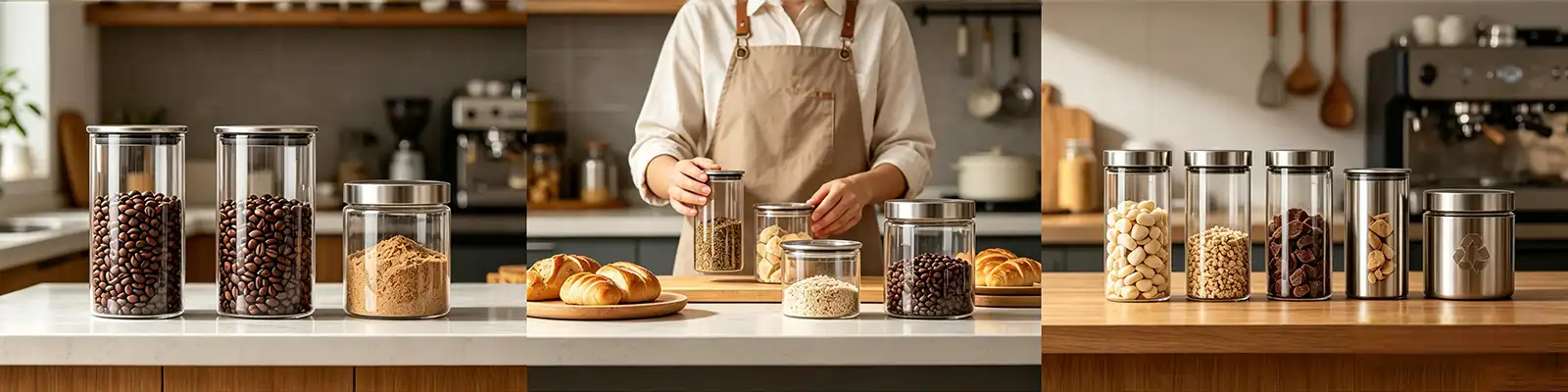
Comparative Analysis: Borosilicate Glass vs Stainless Steel for Storage Jars
Comparing the two sets of data shows that the materials have varied performance profiles, making them ideal for various kinds of operations. By being aware of these distinctions, procurement experts may better identify the solution that will work best in their specific situations.
Durability and Impact Resistance
Stainless steel is far more durable and resistant to damage from collisions. Although borosilicate glass is thermally resilient, it is nonetheless susceptible to breaking from strong impacts, in contrast to stainless steel, which usually just sustains dents rather than full failure when dropped. The durability of stainless steel reduces the need for replacement in settings where there is a high danger of drops, such as hectic preparation lines or delivery operations.
But compared to stainless steel, borosilicate glass is more scratch-resistant. Without regular cleaning, the tiny scratches that appear on stainless steel surfaces over time may become breeding grounds for germs. The smooth, non-porous surface of borosilicate glass remains intact forever, making sanitation practices easier and lowering contamination hazards.
Temperature Resistance and Thermal Performance
High borosilicate storage jar stainless steel lid outperforms stainless steel in thermal shock resistance. It safely transitions from freezer temperatures to boiling water without cracking—a capability particularly valuable for operations requiring rapid temperature changes. Storage jars can move directly from refrigerator to microwave, streamlining food preparation workflows.
Stainless steel has a high heat conductivity, which may be both a benefit and a drawback in certain contexts. This quality allows for quicker heating and cooling, but it also makes containers hot to the touch, so be cautious while handling them. Workplace safety is enhanced by the fact that borosilicate glass stays cooler to the touch even when contents are heated.
Food Safety and Chemical Stability
Despite their differences, both materials are quite effective in preventing food poisoning. The inert nature of borosilicate glass ensures that it will not react with any stored contents, whether they acidic, alkaline, or fatty. This quality is essential for high-end food items because it prevents flavor bleed, metallic aftertaste, and chemical leaching.
Similarly, when made correctly, food-grade stainless steel does not leach or corrode. However, very acidic foods may react with lower-quality stainless steel or surfaces that are degraded over long periods of time. Stainless steel's protective chromium oxide coating may deteriorate with repeated scratches or exposure to strong cleaning solvents, which might eventually compromise food safety.
Airtightness and Seal Performance
The sealing mechanism is the most important part of any storage container. Reliable airtight seals are created by pairing stainless steel lids with silicone gaskets. This combination keeps freshness in and prevents moisture infiltration. These lids are perfect for uses involving high-frequency access since they may be opened and closed several times without compromising the seal.
High borosilicate storage jar stainless steel lid and rubber seals can also provide adequate airtightness but may deteriorate faster. The combination of borosilicate glass jars with stainless steel lids offers an optimal solution—the glass body provides visibility and chemical inertness while the steel lid ensures long-lasting seal integrity. This configuration addresses the primary weaknesses of each material when used independently.
Certification Standards and Compliance
Suppliers' certificates must be confirmed by procurement teams. The chemical and heat resistance of borosilicate glass should be up to par with what is required by ASTM or ISO. Certification as food-grade 304 or 316 stainless steel is required, along with testing records that prove the chromium and nickel levels are within acceptable limits.
Comprehending these credentials helps avoid expensive compliance problems. Failure to provide enough paperwork might lead to rejection by regulatory bodies, product recalls, or even legal action. You may greatly lessen the risk of procurement by forming connections with manufacturers that value certification transparency, such as Xuzhou Pinyunyi Glass, who has thorough quality control processes in place.
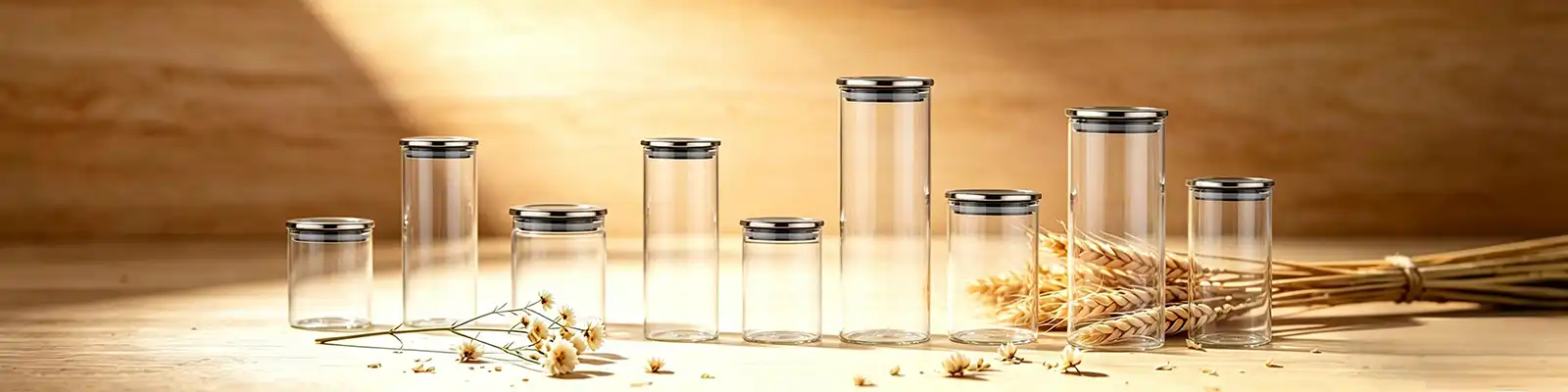
Operational Benefits and Practical Uses of Borosilicate Glass with Stainless Steel Lids
A hybrid solution that offers clear operational benefits in commercial settings is created by combining borosilicate glass bodies with stainless steel covers. This setup takes into account the real-world difficulties encountered by industrial plants, retail establishments, and food service operations.
Cleaning Ease and Sterilization Compatibility
Materials that endure thorough cleaning procedures are essential in commercial food operations due to hygiene regulations. Glass made of borosilicate does not break down or absorb smells when exposed to strong detergents, high-temperature dishwashing, or chemical sanitizers. The smooth, non-porous surface streamlines sanitation operations by preventing bacterial growth in tiny fissures.
On top of that, cleaning agents can't corrode stainless steel lids, which is a major plus. Good quality stainless steel keeps its shape and shine for a long time, unlike plastic substitutes that become weak or discolored with repetitive sanitization. Because of how long it lasts, you won't have to buy new ones as often, and your product will always look its best.
When it comes to industrial kitchens, this combination is lifesaver when it comes to storage methods that are subject to scrutiny during Health Department inspections. Clear glass bodies let you see whether the containers are clean without opening them, and the steel lids keep away any outside contaminants. Thanks to this transparency, pre-shift prep checks are made easier, and personnel expenses related to inventory management are reduced.
Maintaining Airtight Seals in Demanding Environments
Reducing waste and maximizing product freshness are two outcomes of good sealing. Stainless steel lidded high borosilicate storage jars frequently include precision-engineered sealing mechanisms that keep pressure constant even after thousands of open-close cycles. These systems commonly use food-grade silicone gaskets. Because moisture quickly degrades the quality of pricey products like specialized flours, aged spices, and artisan coffee beans, this dependability is crucial for firms keeping these items.
Prior to committing to big orders, testing processes should ensure the integrity of the seal. The water inversion test and the vacuum test are two examples of simple leak detection procedures. In the former, the container is flipped upside down to see whether any water seeps out, and in the latter, the air is evacuated to generate negative pressure, which shows any cracks in the seal. Reliable vendors will have performance data available that shows how well the seal works in different environments.
Best Practices for Maximizing Product Lifespan
Storage containers have a far longer lifespan when properly maintained. Even though borosilicate glass can withstand heat shock, it is still best to keep it away from very cold or hot environments to minimize the stress it will experience over time. Never put a heated jar on a cold surface and wait for it to cool to room temperature before microwaving a chilled one.
Keep an eye out for signs of gasket deterioration on stainless steel lids. In commercial settings with high traffic, silicone gaskets usually last about a year or two before needing to be replaced. Businesses may easily update their sealing components without having to replace complete lids thanks to the changeable gasket systems offered by several manufacturers. The serviceability of this product helps to save expenses in the long run and contributes to sustainability goals.
Lifespan is also affected by how things are stored. To eliminate stress points, stack containers properly. To prevent gasket compression, keep lids separately when not in use. You may improve return on investment and decrease procurement frequency by doubling or tripling the effective service life with these easy measures.
Procurement Considerations for B2B Clients: How to Choose the Right Storage Jar
There are a lot of considerations beyond the purchase price when choosing a storage solution. With the use of thorough assessment frameworks, procurement teams are able to address operational needs while maximizing total cost of ownership.
Balancing Price, Quality, and Supplier Reliability
While cost-effectiveness is important, go-getters often end up spending more than they should due to concerns like early failure, noncompliance, or inefficient operations. Before you ask for quotations, be sure you have defined quality standards. Decline to an acceptable range for cosmetic variance, minimum glass thickness, and necessary certifications. By being so exact, we can avoid comparing goods that aren't compatible and make sure that quotes are for similar products.
Capacity to produce, consistency in quality, and response to communication are all aspects of a reliable supplier. Companies like Xuzhou Pinyunyi Glass, which has been in business for a long and has a sophisticated manufacturing facility and approximately 100 skilled workers, can handle big orders without sacrificing quality. You may check a supplier's capacity and dependability claims by contacting their previous customers in related sectors for references.
Total procurement costs are influenced by payment periods and the flexibility of orders. Businesses may better manage their cash flow and storage space when suppliers provide appropriate minimum order amounts and staged delivery dates. On the other side, inflexible minimal standards may lead to stockpiling, which wastes money and puts products at danger of becoming obsolete.
Certifications and International Food Safety Standards
Verifying compliance shields companies from fines and other legal trouble. Make sure the items are up to code by requesting the necessary paperwork. Thermal shock resistance testing in accordance with ASTM C1055 and certification of a lead-free composition are part of this process for borosilicate glass. An examination of the stainless steel's material composition should be included to certify its food-grade status.
Special considerations are necessary for activities on a global scale. Food contact material exports to the US must adhere to FDA requirements, whilst EU food safety certificates are necessary for EU markets. Import delays are minimized and customs clearance is expedited when suppliers with expertise in export markets are aware of these criteria and have the necessary testing paperwork.
Additional assurance is provided by third-party testing. The composition, thermal characteristics, and efficiency of the seal may be confirmed by independent labs. Product batches are worth significantly more than the testing costs, therefore this verification is worth the extra money spent on procurement.
Customization Capabilities and Bulk Order Flexibility
Customization opens doors for branding, which helps items stand out in crowded marketplaces. Find out what your vendors can do in terms of brand printing, bespoke size, and unique closures. Designs that are in line with the aesthetics of the brand may be achieved since advanced manufacturers provide a variety of decorating methods, including as screen printing, decals, laser etching, and hot stamping.
Avoiding expensive errors is possible with sample review before to committing to production runs. In order to showcase the specified requirements, reputable suppliers provide pre-production samples. In this phase, before production on a larger scale starts, the proportions, material quality, and correctness of the decorations are checked. To prevent making hasty judgments, be sure to include time for sample review cycles in procurement schedules.
At commercial sizes, volume discounts become substantial. Consider negotiating tiered pricing according to order quantity and looking at yearly contracts that promise volume in return for discounted prices. When compared to transactional spot buying, long-term partnerships with dependable suppliers often result in cheaper price and guarantee supply continuity even during times of high demand.
Conclusion
Choosing between stainless steel and borosilicate glass depends on specific operational requirements, but combining both materials through high borosilicate storage jar stainless steel lid delivers optimal performance for most commercial applications. This hybrid approach leverages glass transparency and chemical inertness alongside steel's durability and sealing reliability. Procurement professionals should prioritize suppliers demonstrating quality certifications, production capacity, and customization flexibility. As sustainability and food safety regulations continue tightening, investing in high-quality, long-lasting storage solutions positions businesses advantageously while reducing long-term costs and environmental impact.
Partner with Xuzhou Pinyunyi Glass for Premium Storage Solutions
When it comes to operational efficiency and food safety, investing in quality storage containers is crucial. Jars made of food-grade borosilicate glass with lids made of precision-engineered stainless steel are Xuzhou Pinyunyi Glass' forte. Their products are up to par with global safety requirements. Every request, no matter how big or little, will be met with the same level of quality thanks to our modern manufacturing facilities and our staff of approximately one hundred seasoned specialists.
Flexibility in customisation, dependable delivery dates, and affordable pricing for large purchases are all requirements of business-to-business procurement, which we well grasp. Whatever your logo positioning, size, or closing configuration needs may be, our technical staff works closely with customers to provide personalized solutions. In order to guarantee that each and every one of our high borosilicate storage jar stainless steel lids fulfills our exacting standards, we have instituted stringent quality control procedures.
Contact us at 18168782056@163.com to discuss your storage requirements. Request samples to evaluate our product quality personally, to explore our complete product range. Our export experience spanning Europe, America, Australia, and beyond ensures we understand international compliance requirements and logistics coordination. Let us demonstrate how our commitment to quality, service, and innovation can strengthen your supply chain and enhance your product offerings.
FAQ
Are borosilicate glass jars with stainless steel lids suitable for commercial kitchen environments?
Absolutely. This combination excels in commercial settings due to several factors. The glass body withstands repeated thermal cycling from refrigerator to microwave without cracking, while the stainless steel lid provides durable sealing that maintains integrity through thousands of uses. Transparency allows quick visual inventory checks, reducing labor costs. Both materials meet stringent food safety standards and tolerate harsh commercial sanitization protocols, making them ideal for high-volume operations where hygiene and durability are non-negotiable.
How do stainless steel lids compare to plastic lids for food preservation?
Stainless steel lids significantly outperform plastic alternatives in longevity and seal consistency. Plastic degrades under UV exposure, becomes brittle after repeated dishwashing, and may absorb odors or stain over time. Stainless steel maintains structural integrity indefinitely, resists corrosion from acidic foods, and preserves airtight sealing through extended service life. While plastic costs less initially, stainless steel delivers better total cost of ownership through reduced replacement frequency and superior performance in demanding commercial environments.
Can borosilicate glass withstand rapid temperature changes without breaking?
Yes, this represents borosilicate glass's primary advantage over standard soda-lime glass. Its low thermal expansion coefficient allows safe transitions from freezer temperatures to boiling water. Testing shows quality borosilicate glass tolerates temperature differentials exceeding 165°C without thermal shock failure. This property proves essential in commercial food preparation where containers move quickly between refrigeration, room temperature prep areas, and heating applications, streamlining workflows without risking container breakage.
References
1. American Society for Testing and Materials. "Standard Specification for Borosilicate Glass." ASTM International Standards for Laboratory Glassware and Thermal Properties, 2019.
2. Chen, L., and Zhao, M. "Comparative Analysis of Food Storage Materials: Chemical Stability and Safety Profiles." Journal of Food Science and Technology, vol. 56, no. 4, 2021, pp. 1823-1835.
3. Food and Drug Administration. "Guidance for Industry: Food Contact Substances—Materials for Manufacturing and Processing Equipment." U.S. Department of Health and Human Services, 2020.
4. Martinez, R. "Thermal Shock Resistance in Commercial Glassware: Performance Testing Methodologies." International Journal of Applied Glass Science, vol. 12, no. 3, 2020, pp. 412-427.
5. Thompson, K., and Wright, S. "Sustainable Packaging Solutions in Food Service Industries: Material Selection and Lifecycle Assessment." Packaging Technology and Science, vol. 34, no. 2, 2022, pp. 89-104.
6. Wilson, P. "Stainless Steel in Food Processing: Corrosion Resistance and Regulatory Compliance." Food Engineering Review, vol. 13, no. 1, 2021, pp. 156-171.
Learn about our latest products and discounts through SMS or email