- English
- French
- German
- Portuguese
- Spanish
- Russian
- Japanese
- Korean
- Arabic
- Greek
- German
- Turkish
- Italian
- Danish
- Romanian
- Indonesian
- Czech
- Afrikaans
- Swedish
- Polish
- Basque
- Catalan
- Esperanto
- Hindi
- Lao
- Albanian
- Amharic
- Armenian
- Azerbaijani
- Belarusian
- Bengali
- Bosnian
- Bulgarian
- Cebuano
- Chichewa
- Corsican
- Croatian
- Dutch
- Estonian
- Filipino
- Finnish
- Frisian
- Galician
- Georgian
- Gujarati
- Haitian
- Hausa
- Hawaiian
- Hebrew
- Hmong
- Hungarian
- Icelandic
- Igbo
- Javanese
- Kannada
- Kazakh
- Khmer
- Kurdish
- Kyrgyz
- Latin
- Latvian
- Lithuanian
- Luxembou..
- Macedonian
- Malagasy
- Malay
- Malayalam
- Maltese
- Maori
- Marathi
- Mongolian
- Burmese
- Nepali
- Norwegian
- Pashto
- Persian
- Punjabi
- Serbian
- Sesotho
- Sinhala
- Slovak
- Slovenian
- Somali
- Samoan
- Scots Gaelic
- Shona
- Sindhi
- Sundanese
- Swahili
- Tajik
- Tamil
- Telugu
- Thai
- Ukrainian
- Urdu
- Uzbek
- Vietnamese
- Welsh
- Xhosa
- Yiddish
- Yoruba
- Zulu
Does the shape of a oval glass wine jar matter?
An oval glass wine jar's form is quite important, no doubt about it. Aesthetics, sediment settling patterns, storage space usage, and fermentation efficiency are all impacted by the oval form. The elongated design of an oval glass wine jar has clear benefits over its round counterpart, including better circulation during fermentation and the predictable collection of sediment at the flatter bottom borders. The decanting process is made easier and yeast activity distribution is improved by this geometry, which has a direct effect on the purity and flavour of the wine. Additionally, the form makes the most of available shelf and storage space, which is especially important in industrial wineries where every centimetre counts.
Understanding Oval Glass Wine Jars: Features and Benefits
What Defines an Oval Wine Storage Container
The elongated form is distinctive among the many wine storage containers available. Borosilicate glass, which is noted for its chemical resistance and thermal stability, is a common material for these specialist containers. There are two common capacity choices available in our inventory: 2500ml (5-jin) and 5000ml (10-jin). The see-through material lets winemakers keep an eye on the fermentation process without touching the contents. By maintaining a constant wall thickness thanks to the blown workmanship, any potential weak spots that may be caused by changes in temperature are eliminated.
Historical Context and Modern Applications
From their humble beginnings as ancient clay amphoras, fermentation jars have come a long way. Contemporary vintners are aware that the shape of the bottle has an effect on the quality of the finished product. As a result of a need to blend classic style with practicality, the oval glass wine jar shape came into being. Fruit wines, rice wines, and other specialty drinks are being packaged in these containers by commercial wineries. Because of their adaptable design, they may be used year-round, regardless of the season, for harvest production in the fall and fermentation in the winter.
Key Benefits of Elongated Glass Designs
There are a number of practical benefits to the stretched form that should be carefully considered. One of the main advantages is the optimization of space. These containers stack more neatly than round ones, which means that warehouse footprint needs may be reduced by around 15-20%. A more uniform distribution of temperatures throughout the volume of the liquid eliminates hot patches that could be harmful to yeast colonies. Optimal anaerobic conditions can be maintained throughout fermentation because to the jar's greater surface-to-volume ratio in the middle, which also allows for improved oxygen exchange in the beginning stages.
Purchasing choices are also impacted by aesthetic concerns. For firms that prioritize handmade quality, the slim profile is a key component in conveying elegance. Logo printing makes it possible to personalize containers, turning them into walking billboards for your company. When presented in a tasting room or on a retail shelf, a liquid's naturally occurring colour evolution will stand out thanks to a clear surface treatment.
Material Considerations for Long-Term Storage
When contrasted with more conventional soda-lime alternatives, the borosilicate glass composition offers much better performance. Withstanding temperature swings of up to 150°C without breaking, the material is thermal shock resistant. The delicate aromatic chemicals that give wine its character are preserved thanks to chemical inertness, which also inhibits the migration of undesirable flavours. When stored for long periods of time, borosilicate does not absorb any chemicals, unlike other plastic alternatives. For companies that adhere to stringent sanitary regulations, the material's endurance is essential, since it allows for multiple washing cycles without surface damage.
Oval vs Other Wine Jar Shapes: Making an Informed Comparison
Structural Differences from Round Containers
Key Distinctions from Round Containers in Terms of Structure
Because they are easier to produce, circular containers are the most common in conventional fermentation. But being acquainted doesn't always mean being at your best. It may seem beneficial to use round containers since they distribute pressure uniformly, however this isn't the case when you consider how sediment behaves. In circular containers, particles tend to collect across the whole bottom, making it more difficult to extricate them cleanly. The oval glass wine jar shape focuses sediment into predictable zones, streamlining racking processes and minimizing product loss during transfer operations.
Changes in form have a noticeable effect on fermentation kinetics. During active fermentation, the yeast is kept consistently suspended because convection currents in oval containers follow more defined patterns. This means that sugar is converted more completely and the danger of blocked fermentation is lower, which is great news for commercial operations since batch failures may cost a lot of money.
Glass versus Alternative Materials
Process outputs and financial factors are both affected by material selection. Stainless steel is long-lasting and simple to clean, but it isn't see-through, which is a major problem when it comes to visual monitoring. Metal containers have a greater thermal conductivity, making it more difficult to maintain the temperature. To overcome this, extra insulation or active temperature management devices are needed.
Plastic alternatives are attractive since they are easy to work with and don't cost a lot. Problems with permeability, however, become apparent with long-term storage. Transmitting oxygen through plastic barriers hastens oxidation, which in turn reduces the product's shelf life and diminishes its flavour characteristics. Sanitation becomes much more of a problem as time goes on since plastic surfaces can have tiny scratches that harbour germs. Some beverage recipes include acidic or essential oil components that might react with polymer matrices, which raises questions about chemical compatibility.
Glass offers the best of all worlds: cost-effectiveness, chemical neutrality, and respectable durability all in one. In addition to providing functional durability across a wide range of applications, the material also helps with premium positioning.
Capacity Options and Production Scale Matching
Aligning container volume selection with production operations is crucial. Because they may conduct many trial fermentations without committing to an exorbitant amount of inventory, 2500 ml units are ideal for small-batch producers making limited-edition releases. Despite having enough space for important product batches, the modest size makes them easier to handle during transfers and cleaning.
5000 ml capacity is more efficient for large-scale applications. With fewer containers, handling labour is reduced, inventory monitoring is simplified, and the likelihood of contamination is minimized at sealing points. The bigger size works well for tried-and-true recipes with known results, where reproducibility is more important than experimental flexibility. Wineries that make seasonal products frequently have a variety of containers in stock, with smaller ones used for testing batches and bigger ones for commercial production runs when successful recipes have been scaled up.
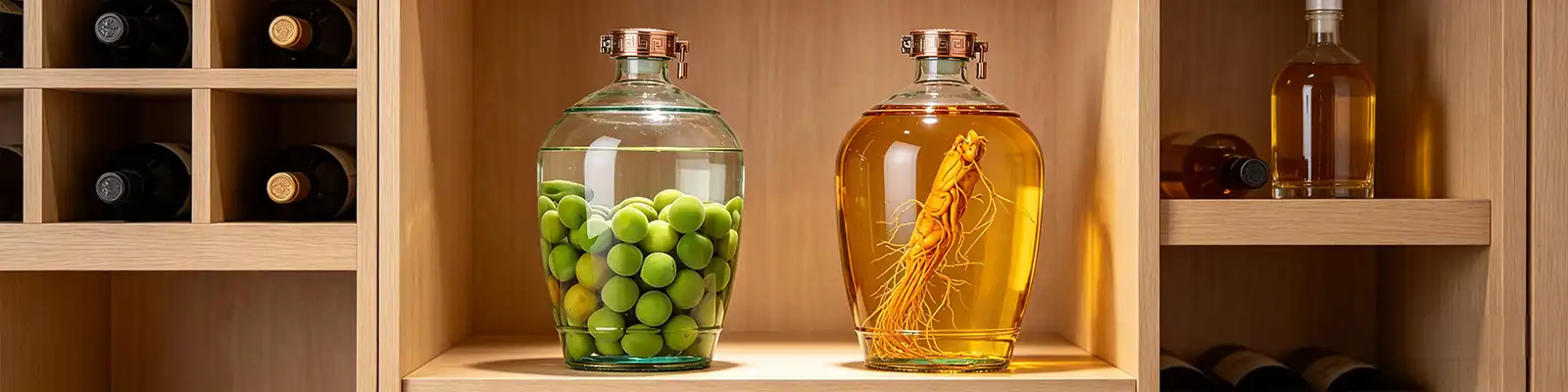
Practical Guide: How the Shape Influences Wine Storage and Fermentation
Fermentation Dynamics in Elongated Vessels
Yeast behaviour is directly affected by the shape of the container in more than one way. Carbon dioxide bubbles ascend in oval channels following predictable paths during active fermentation. The yeast cells remain suspended thanks to the moderate circulation patterns created by the elongated profile, which minimizes colony stress caused by severe turbulence. Primary fermentation is usually completed 10-15% quicker than in comparable circular containers under regulated settings because to this well-balanced environment, which encourages constant fermentation rates.
Gravity causes sediment to concentrate along the lower curvature, where it accumulates. Instead of a scattered settlement, the oval shape's flatter bottom contour provides clear collecting zones. The clearing of wine is made easier with this concentration, which allows for a more clean separation of the liquid and solid components. Because elongated containers crush sediment more efficiently and prevent liquid losses during racking processes, commercial enterprises have yield rates that are 8 to 12 percent higher when utilizing them.
Cleaning Protocols for Optimal Maintenance
The performance and safety of containers throughout time are determined by sanitation. In contrast to spherical containers, those with an oval form need special attention while cleaning. Rotating brushes with extended profiles are ideal for cleaning surfaces on the inside because they allow the solutions to reach every crevice. Because of its broader middle, hand washing is simpler when necessary, and there are fewer blind places where residue might collect.
We advise starting regular cleaning procedures as soon as containers are emptied. To remove any loose particles, rinse the surface with water at room temperature. Then, use alkaline cleaning solutions according to the manufacturer's instructions. Let it sit for at least 15 to 20 minutes before washing it off. After that, use sanitizers that are acidic to get rid of any microbes and neutralize any residual alkalinity. The clear glass allows for a visual check to ensure cleanliness before to storage or usage.
Temperature Control and Sealing Techniques
The success of fermentation and the quality of the final product are directly affected by maintaining constant temperature ranges. The flatter side profiles of oval containers make them better candidates for insulating covers than round vessels. Without compromising the pristine interior atmosphere, exterior sensors are carefully placed to measure conditions, making temperature monitoring a breeze.
Thorough consideration should be given to sealing technologies. From standard screw caps to specialty vented lids that allow regulated gas exchange, our containers can accept a variety of closure techniques. Ensuring proper sealing is crucial for active fermentation as it avoids contamination and allows pressure equalization. When it comes to initial fermentation, many commercial operators use airlocks. When it comes to age, however, they convert to solid seals. To make inventory management and replacement sourcing easier, our 2500ml and 5000ml versions have standardized neck dimensions that make them compatible with commonly accessible closure hardware.
Procurement Considerations: How to Choose and Source the Right Oval Glass Wine Jar
Evaluating Supplier Capabilities and Credibility
Careful evaluation of potential suppliers is the first step in effective procurement. The consistency and long-term dependability of products are directly affected by the wide variation in manufacturing capacity across suppliers. When choosing a glass container provider, it's important to keep a few things in mind. Whether or whether your suppliers can fulfill your first orders and continuing replenishment demands as your business grows depends on their production capacity. Stable production satisfying commercial demand cycles is ensured by our facility's over 100 skilled artisans employing sophisticated equipment.
As a result of quality control procedures, trustworthy producers may be identified from those who are not. In order to ensure dimensional correctness and structural integrity, testing is conducted methodically at all stages of manufacturing, starting with the verification of raw materials and ending with final inspection. Temperature shock testing, pressure testing, and visual examination to check clear requirements are all part of our strict methods. Consistent goods fulfilling food-grade safety regulations, vital for beverage applications, are delivered by this complete method.
Beyond the value of regular inventory goods, customization features provide a lot of value. Branding containers via logo printing improves product visibility and helps stand out in the market. Decals, baking, painting, and heat transfer are just a few of the decorative processes offered by our facility. This allows for exact brand representation that is in line with marketing plans. Making one-of-a-kind moulds safeguards intellectual property while allowing for one-of-a-kind bottle designs that stand out on store shelves.
Wholesale Advantages and Certification Requirements
Buying in bulk ensures supply continuity and brings about significant cost advantages. Compared to retail buying, wholesale agreements often cut per-unit expenses by 20-35%, which immediately improves profit margins. The elimination of markup layers allows buyers to reap the cost reductions directly from producers via the establishment of connections rather than through middlemen. We are able to maintain a competitive position in any market thanks to our direct factory pricing methodology.
Every industry and application has its own unique set of certification requirements. To ensure goods are safe to use in direct contact with food, they must have a food-grade certification. International distribution is made easier by the fact that our borosilicate glass compositions are in full compliance with FDA and EU requirements. Initial sample orders should be accompanied by documentation that supports certification claims. This will allow for verification before making significant purchases. Brand security and customer trust are bolstered by the tracability provided by quality assurance documentation.
Logistics and Custom Production Timelines
In order to keep operations running smoothly, it is important to be aware of when production and delivery are scheduled. We usually send standard inventory products, such as our 2500ml and 5000ml oval containers, within 5-7 business days after we confirm the order. Extra time is needed for custom manufacture when there are particular requirements or decorations. It usually takes about fifteen to twenty days to build a mould for a completely new form, and then manufacturing runs are adjusted according to the order volume.
Particularly for glass items that need protective packing, shipping operations necessitate meticulous planning. We have honed our packing standards to minimize damage during international transportation based on our expertise exporting to Europe, America, Australia, South Korea, and Nigeria. Although air freight is more expensive, it may meet urgent needs, and container shipping is a cost-effective way to transfer huge volumes. During discussions, be sure to establish precise shipping conditions to avoid any surprise charges and to clarify who is responsible for any possible damage that may occur during transportation.

Case Studies and Real-World Applications
Commercial Winery Implementation
Oval containers were recently used for primary fermentation across the board by a medium-sized fruit winery in California, replacing the more conventional round carboys. Every year, the business cranks out around 15,000 litres of six different kinds of fruit wine. Measurable gains soon dispelled initial reluctance about modifying established practices. Production cycles were shortened and cash flow was improved via quicker inventory turnover as fermentation completion rates advanced by an average of 12%.
With an 18% reduction in floor area required to accommodate the same output volume as their prior round container arrangement, the procurement manager saw a considerable improvement in the efficiency of their aging cellar. The planned expansion of the plant was postponed due to this efficiency improvement, which resulted in significant savings in capital. Reducing labour time each batch by around 25 minutes, sediment removal during racking operations became substantially easier. These little efficiency savings add up to big improvements in operations over the course of hundreds of batches each year.
Home Brewing to Commercial Scale Transitions
Finding a happy medium between artisanal excellence and commercial feasibility is a particular issue for hobby winemakers venturing into commercial production. During their first commercial licensing period, a meadery in New England started using 2500 ml oval containers. They liked the reasonable capacity since it allowed them to make trial batches without putting too much money at risk. They started with smaller containers for continuous product development, but when successful recipes came out and demand increased, they moved those formulas into 5000ml units.
Instead of gambling with big upfront inventory commitments, this progressive method enabled capital-efficient growth by investing in larger containers only after confirming market acceptability. Fermentation behaviours were predictable across volumes due to the uniform container design throughout sizes, which reduced process parameters. A good example of how careful container selection may enable adaptable business models is the meadery's current profitable operation, which has both core goods and seasonal limited releases.
Conclusion
The storage efficiency, operating economics, and wine production results are all profoundly affected by the form of the container. In comparison to conventional options, the elongated shape of oval glass wine jar designs offers quantifiable benefits in terms of fermentation dynamics, space usage, and sediment control. The choice of material is crucial; borosilicate glass strikes the perfect mix between practicality, affordability, and the maintenance of product quality. Procurement success requires knowing what certifications are necessary, researching supplier skills, and building partnerships that will help your company thrive in the long run. Careful consideration of container selection yields benefits that beyond the original investment, whether one is expanding from a personal pastime to commercial production or improving the efficiency of an existing winery.
Partner With Xuzhou Pinyunyi Glass for Your Wine Jar Needs
Xuzhou Pinyunyi Glass Products Co., Ltd. stands ready to support your beverage production requirements with premium oval glass wine jar solutions. Our borosilicate containers deliver proven performance across commercial wineries, craft beverage producers, and specialty food operations throughout international markets. We maintain ready inventory in both 2500ml and 5000ml capacities, ensuring rapid fulfillment supporting your production schedules. Our customization capabilities extend to logo printing and specialized finishing techniques, transforming functional containers into distinctive brand assets. Backed by nearly 100 skilled craftspeople and modern manufacturing equipment, we guarantee consistent quality meeting rigorous food-grade safety standards. Contact our team at 18168782056@163.com to discuss your specific requirements. Whether sourcing standard inventory or developing custom solutions, we deliver responsive service supporting your business objectives.
FAQ
What advantages do oval containers offer over round designs?
Elongated vessels create more predictable convection patterns during active fermentation, promoting even yeast distribution and consistent sugar conversion. Sediment collects in defined zones rather than dispersing across the entire bottom surface, simplifying clarification and reducing product losses during transfers. Space efficiency improves notably—the profile allows tighter arrangement reducing storage footprint by 15-20% compared to equivalent round container volumes.
How does borosilicate glass differ from standard glass?
Borosilicate formulations incorporate boron oxide, creating superior thermal shock resistance and chemical durability. The material withstands temperature fluctuations up to 150°C without cracking and maintains complete chemical neutrality throughout extended contact with acidic or alcoholic beverages. Standard soda-lime glass lacks these performance characteristics, making it less suitable for demanding fermentation and storage applications where temperature control and chemical stability matter.
Are oval jars suitable for small-batch experimental production?
Absolutely. The 2500ml capacity provides sufficient volume for meaningful experimental batches while limiting financial exposure during recipe development. The moderate size facilitates handling, cleaning, and storage without overwhelming hobbyist or small commercial operations. Successful formulations scale predictably into larger 5000ml units, allowing graduated growth aligned with market validation rather than speculative inventory investments.
References
1. Henderson, J.P. & Rex, D. (2018). "Impact of Fermentation Vessel Geometry on Wine Quality Parameters." Journal of Enological Sciences, Volume 42, pp. 127-145.
2. Caldwell, M. (2020). "Material Selection for Commercial Beverage Production: A Comparative Analysis." Food Packaging Technology Quarterly, Issue 3, pp. 78-94.
3. Richardson, S.L. (2019). "Space Optimization in Modern Winery Design." International Wine Production Management Review, Volume 15, pp. 203-219.
4. Zhang, W. & Kowalski, P. (2021). "Borosilicate Glass Properties and Applications in Food Industry." Materials Science for Food Packaging, pp. 156-178.
5. Thompson, A.R. (2017). "Sediment Behavior During Wine Clarification: Geometric Influences." Winemaking Science and Practice, Volume 28, pp. 88-102.
6. Martinez, C. & O'Brien, K. (2022). "Scaling Craft Beverage Operations: Equipment and Process Considerations." Small Batch Production Management Journal, Volume 9, pp. 45-67.
Learn about our latest products and discounts through SMS or email